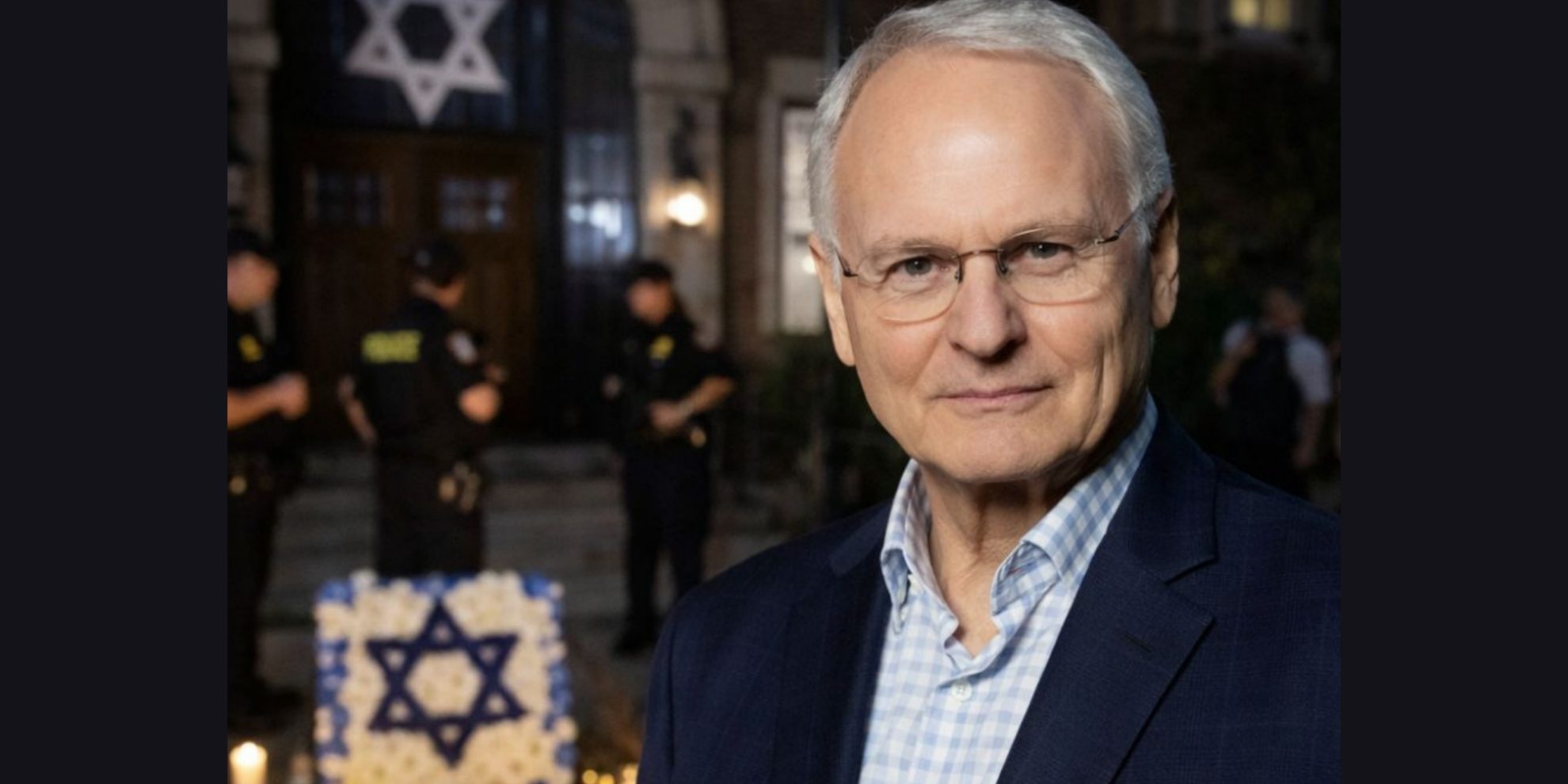
“Silence and equivocation in the face of such hatred only embolden the perpetrators,” Klein stated.
By TheJ.Ca Staff
(March 16, 2026 / THEJ.CA) Morton A. Klein, president of the Zionist Organization of America, is urging U.S. political leaders to take stronger and more explicit action in response to what he describes as a growing wave of antisemitic incidents targeting Jews and Jewish institutions in the United States and worldwide.
In a statement released this week, Klein said recent events reflect a broader trend that requires urgent attention from elected officials and public figures.
“Almost every day we witness yet another outrageous attack on a Jew or a Jewish institution in the United States and around the world,” Klein said. “This intolerable surge in antisemitism cannot be ignored, minimized, or explained away.”
Call For Congressional Action
Klein called on members of Congress to issue clear and consistent condemnations of antisemitic violence.
“We call upon every member of Congress to unequivocally condemn these antisemitic assaults and the vile Israel bashing that so often fuels and legitimizes hatred of Jews,” he said.
He added that failure to respond decisively could contribute to an environment in which such incidents continue.
“Silence and equivocation in the face of such hatred only embolden the perpetrators,” Klein stated.
The ZOA has long advocated for strong U.S. support for Israel and for policies aimed at combating antisemitism both domestically and internationally.
Concerns About Public Rhetoric
Klein also raised concerns about the role of public discourse in shaping attitudes toward Jews and Israel.
He urged political leaders, including President Donald Trump and Vice President JD Vance, to publicly address rhetoric that he believes contributes to hostility toward Jewish communities.
“We also urge every member of Congress, as well as President Trump and Vice President Vance, to publicly and forcefully condemn those prominent voices who traffic in reckless Israel bashing and rhetoric that inflames hostility toward Jews,” Klein said.
He specifically referenced media figures Tucker Carlson and Candace Owens, arguing that influential commentary can have broader societal effects.
“When influential personalities spread distortions and hostility toward the Jewish state, they help create an atmosphere in which antisemitism thrives,” he added.
Broader Security Concerns
Klein’s statement also highlighted concerns about extremist ideologies that may contribute to antisemitic violence.
He called on leaders to address what he described as the role of radical Islamist ideology in promoting hatred against Jews.
“At the same time, our leaders must have the courage to speak honestly about the role that radical Islamist ideology and extremist imams have played in fomenting antisemitic hatred and violence,” Klein said.
He argued that acknowledging these factors is necessary for developing effective responses to threats against Jewish communities.
Security analysts and law enforcement agencies in the United States have identified multiple sources of antisemitic activity, including both domestic and international influences.
The FBI and other agencies have repeatedly noted that antisemitism remains one of the most persistent forms of hate related incidents in the country.
Rising Incidents and Community Impact
Jewish organizations across North America have reported an increase in antisemitic incidents in recent years, including vandalism, threats, and physical attacks.
Community leaders say these incidents have led to increased security measures at synagogues, schools, and Jewish institutions.
Many institutions have expanded security protocols, including hiring guards, installing surveillance systems, and coordinating closely with local law enforcement.
Public officials have also acknowledged the importance of protecting religious communities and ensuring that places of worship remain safe.
ZOA’s Role and Advocacy
Founded in 1897, the Zionist Organization of America is one of the oldest pro-Israel organizations in the United States.
The group focuses on education, advocacy, and policy engagement related to Israel and Jewish issues.
Klein, who has served as national president since 1993, is widely regarded as a prominent voice within the American Jewish community on matters related to Israel and antisemitism.
In his statement, Klein emphasized the need for what he described as moral clarity from political leaders.
“America’s leaders must clearly and unapologetically denounce these bigoted forces and make it unmistakably clear that decent Americans are repulsed by such hatred,” he said.
He warned that failure to act decisively could have serious consequences.
“If this moral clarity is not shown now, the danger to Jewish communities will only grow more severe,” Klein added.
Ongoing Debate and Policy Considerations
Klein’s remarks come amid ongoing discussions in the United States about how best to address antisemitism while balancing free speech and political debate.
Lawmakers and advocacy groups continue to debate policy approaches, including legislation, law enforcement strategies, and public education initiatives.
Many Jewish organizations emphasize that combating antisemitism requires cooperation across political, religious, and cultural lines.
They also stress the importance of distinguishing between legitimate political discourse and rhetoric that crosses into hate or incitement.
As incidents continue to be reported, calls for stronger responses from government leaders and civil society are likely to remain a central issue in public debate.
For many Jewish communities, the priority remains clear. Ensuring safety, promoting understanding, and confronting hatred in all its forms.
This article was originally published by THEJ.CA and can be viewed here.