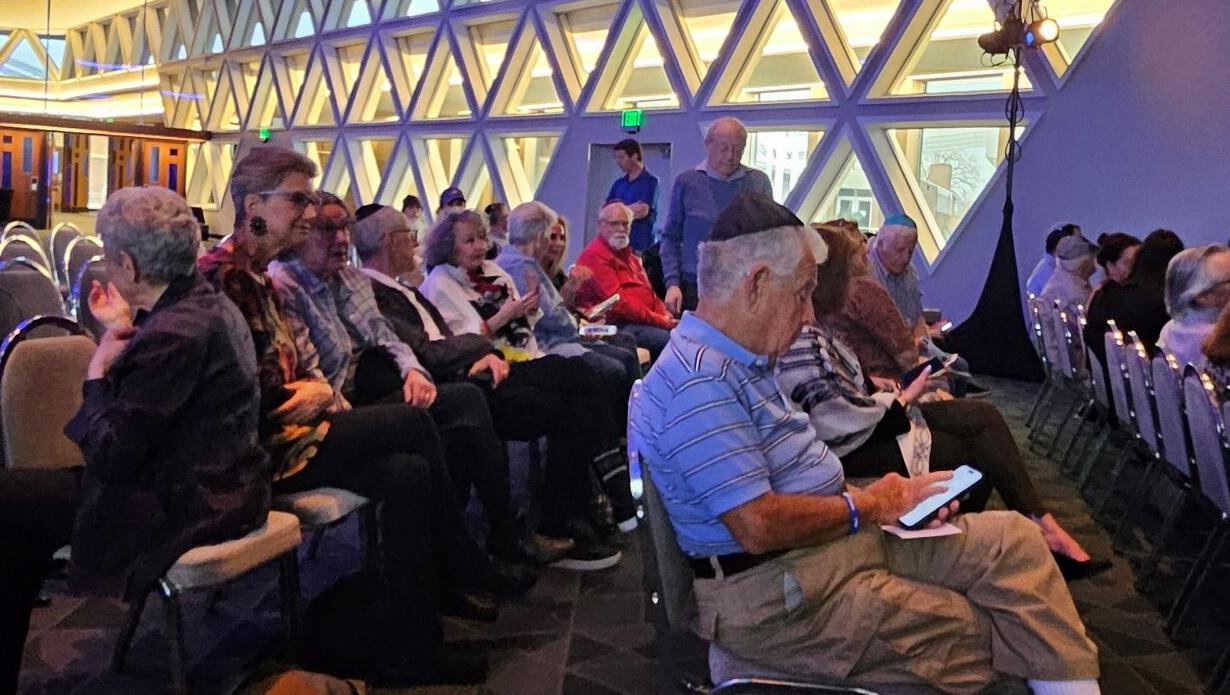
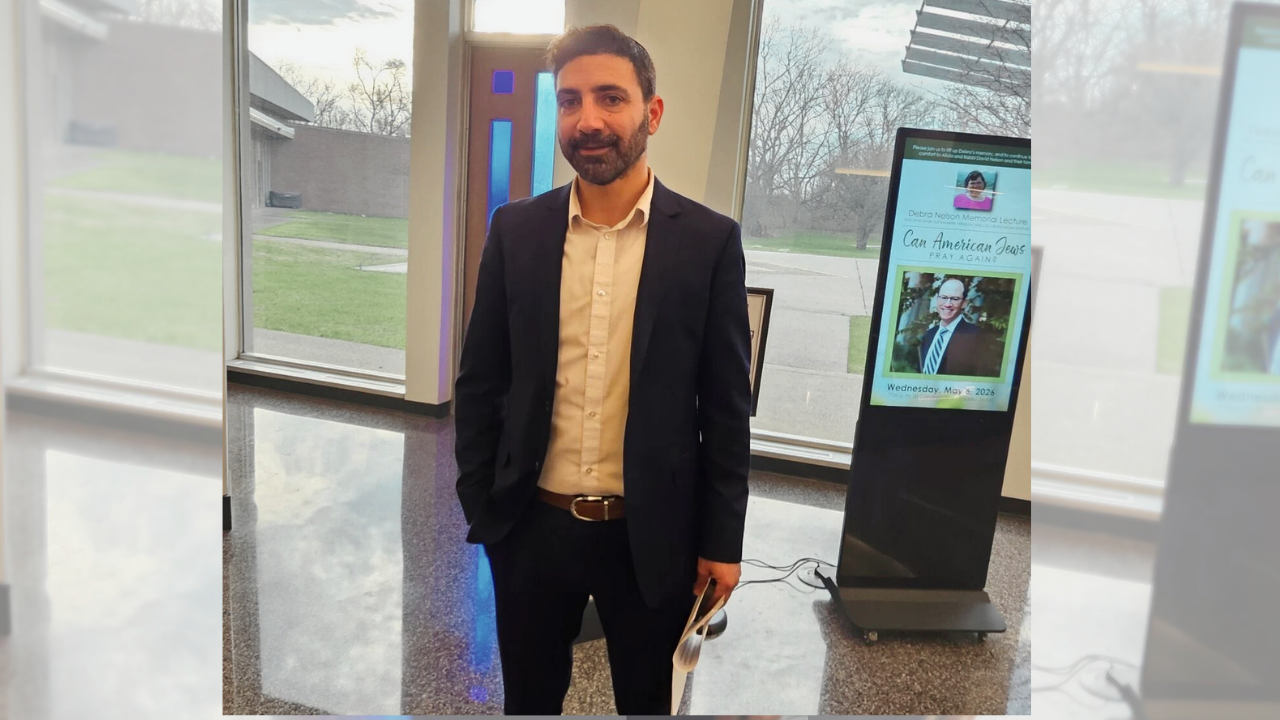
Kobi Erez, executive director of ZOA Michigan, opened the program. “Unity is one of the most important ways of combating antisemitism,” he said. “We must strengthen our Jewish identity for the next generation.”
By Shari Cohen
(April 20, 2026 / Detroit Jewish News)
Professors describe entrenched antisemitism in higher education at ZOA program.
After Hamas attacked Israel in October 2023 and Israel’s strong response in Gaza, many American college campuses experienced large-scale, vocal and sometimes violent pro-Palestinian protests.
News reports documented large pro-Palestinian encampments making it difficult for students to reach classroom buildings, verbal and physical assaults against Jewish students and faculty, and anti-Israel and antisemitic graffiti on Jewish campus buildings. The climate at some schools was tense, even frightening, for Jewish students.
ZOA Michigan (Zionist Organization of America) presented “The Rise in Antisemitism in America and on College Campuses” program on April 12 at Congregation Shaarey Zedek. The program explored the forces behind the dramatic increase in antisemitism, which in the U.S. has been especially visible on college campuses. Program co-sponsors were Farber Hebrew Day School, ADL Michigan, Jewish Family Service, The J, Hillel Day School, Frankel Jewish Academy, End Jew Hatred and B’nai Israel.
Kobi Erez, executive director of ZOA Michigan, opened the program. “Unity is one of the most important ways of combating antisemitism,” he said. “We must strengthen our Jewish identity for the next generation.”
Agreement on the Current Dire Situation
The panel included Professors Amy Elman (Kalamazoo College), Victor B. Lieberman (University of Michigan) and Michael Weingard (Portland State University). They presented a view of antisemitism on college campuses as an entrenched problem with few obvious or quick solutions.
According to these professors, the sources of this discrimination and hatred stem from news media bias; university policies that allow academic departments the freedom to choose faculty — typically only those with similar views; and the reliance of young people on biased social media for much of their information.
Elman said that when antisemitic incidents first became serious, they occurred at schools well-known for activism and left-wing bias such as Portland State University, San Francisco State and Oberlin; but quickly anti-Israel protests, antisemitic harassment and even assaults expanded to other schools. Now she is “worried about whether there will be a future for us as American Jews.” She cited her research regarding the response of the European Union to European Jews facing antisemitism, which was not encouraging.
“We have a deep problem here. It was always someplace else. We have to increase our consciousness about how we’re treated and unacceptable behavior,” Elman said.
Lieberman, who is a professor of Asian History, focused on the impact of social media, which he described as “antisemitic and anti-Israel.” They are the primary news and entertainment sources for young people, and he said that Americans under age 25 are the most antisemitic. He said that 60% of Jewish American teens have experienced antisemitic behavior.
Lieberman discussed the double standard used for Israel and Jews — news media and Palestinian supporters condemn Israel for its attacks in Gaza but omit the intense violence perpetrated by some Muslim countries. He attributes some of the campus anti-Israel sentiment to the dominance of left-wing Democrats on many faculties.
Michael Weingard, professor of Judaic Studies at Portland State University, spoke of the destruction at the university’s library by a group of pro-Palestinian students who occupied the building for several days, defaced it with graffiti, broke equipment and trashed many areas. Weingard noted that this action was supported by some students and faculty, escaped national media attention and that no one was held accountable for it. The library was closed for months and repairs cost more than $1.2 million.
Weingard is currently a visiting professor at Hillsdale College in Michigan, a small Christian liberal arts college known for its refusal to accept federal funds in order to retain independence. “I feel welcome here and appreciate the fellowship between Jews and Muslims — both students and faculty,” Weingard said.
“Some institutions have been asleep, especially the Ivy League schools. The situation is dire. We can rise to the occasion. Israel has. We have not,” Weingard said.
The presenters offered a few ideas for positive change. Lieberman said that 70%-80% of donors at the University of Michigan are Jewish and that their philanthropy could possibly be leveraged for positive change. Also, federal threats and reduction of university funding have had an impact.
According to Elman, “antisemitism makes us more Jewish-identified. There is a recommitment to Jewish learning and practice.” She said that Chabad has been a positive force on campus.
But to Lieberman, “People hire people like themselves — anti-Israel — and it has been self-perpetuating since the 1960s. Departments have autonomy and we need to set up a system of alternative education.”
Weingard concurred. “Non-left liberals do not exist in higher education. There is no possibility of reforming them. There has been a slow corruption of values that we thought we all shared, and we need to focus on American values and books.”
ADL Evaluates Universities’ Policies and Practices
Elyssa Schmier, executive director of ADL (Anti-Defamation League) Michigan, spoke about recent efforts to evaluate universities’ policies and practices concerning antisemitism and Jewish students’ welfare. ADL has developed criteria used for 150 universities and colleges across the country. While university policies are important, she said, these rules have to have accountability to be meaningful.
ADL evaluated colleges on 33 criteria grouped into three categories: “Publicly Disclosed Administrative Actions,” “Jewish Life on Campus” and “Campus Conduct and Climate Concerns.” Schmier explained that ADL provided each institution not only with a grade of A to F but specific guidance on how to improve life for Jewish students.
In Michigan, four higher education institutions were evaluated in 2024 and 2026. This year, Michigan State received a B, Kalamazoo College and Wayne State received Cs, indicating “Corrections Needed.” The University of Michigan received a C “just barely” Schmier said, although this was two rankings above their 2024 results.
Each of the schools took some positive action in response to ADL’s assessments.
This article was originally published in The Detroit Jewish News and can be viewed here.