By Morton A. Klein
(May 7, 2026 / USA Today) In conventional diplomacy, delay is treated as a temporary obstacle. Negotiations stall, deadlines slip, and parties assume that more time will eventually yield compromise. With the Islamic Republic of Iran, that assumption is not merely incorrect. It is strategically dangerous.
Delay is not a malfunction in Iran’s diplomacy. It is the mechanism itself.
For more than four decades, Western policymakers have misread Iranian behavior as situational, driven by internal politics or negotiating complexity. In reality, it is structural. The regime in Tehran operates according to a coherent strategic logic in which negotiations are not instruments of resolution, but instruments of avoidance.
At the center of that logic is time.
Iran is negotiating — to stretch time
Iran does not delay negotiations in order to improve its bargaining position. Delay is its bargaining position. Each extension, each procedural dispute, each open-ended ceasefire is designed to produce a singular outcome: the preservation and advancement of its strategic capabilities while external pressure dissipates.
This strategy cannot be separated from the regime’s ideological foundation.
The Islamic Republic is not a conventional nation-state pursuing limited geopolitical interests. It is a revolutionary Islamic regime that fuses state power with a religious doctrine that frames its conflict with the United States, Israel and the West as enduring and existential. Its leadership has long cast this struggle in theological terms, portraying it as a divinely sanctioned mission grounded in jihad, resistance and religious obligation.
Within this framework, conflict is not episodic. It is continuous. Politics becomes an extension of religious struggle, and negotiation becomes a tactical instrument within that struggle. “Taqiyya” (Islamic ordained strategic deception), proxy warfare and calibrated violence are not deviations from Iran’s modus operandi. They are integral to it.
This ideological structure helps explain a historical record that is both consistent and deliberate.
Since 1979, Iran has engaged in a sustained campaign of hostility toward the United States and its allies. The seizure of the U.S. Embassy in Tehran and the 444-day hostage crisis established the model. It was followed by the bombing of the U.S. Marine barracks in Beirut that killed 241 Americans, the Khobar Towers attack, the U.S. embassy bombings in East Africa, and repeated attacks on American forces in Iraq and Syria. U.S. court proceedings and official investigations have also documented Iran’s connections to broader terrorist networks. U.S. court proceedings and official investigations have also documented aspects of Iran’s broader engagement with terrorist networks, including Havlish v. bin Laden, which found Iranian support tied to the terrorists who perpetrated the murder of nearly 3,000 Americans on 9/11. The 9/11 Commission Report also documented Iranian support for al-Qaeda terrorists.
Taken together, this is not a series of isolated incidents. It is a continuous pattern of behavior rooted in ideology, reinforced through state policy and sustained across decades.
Iran will negotiate — as it fights
That pattern does not pause for diplomacy.
Iran does not compartmentalize negotiation and conflict. It conducts them simultaneously. Even during periods described as ceasefires, Iranian forces continue hostile activity in strategic waterways such as the Strait of Hormuz, disrupting international commerce and projecting power. Negotiation and aggression are not sequential phases in Iran’s system. They are parallel tracks.
At the negotiating table, Iran’s objective is not agreement but time. In conventional diplomacy, delay precedes a proposal. In Iran’s system, delay is the proposal.
That is why open-ended timelines are so dangerous. Ceasefire extensions and prolonged talks are often justified as necessary for internal consensus, yet history shows internal divisions do not change the regime’s behavior. They prolong it. While negotiations drag on, Iran continues uranium enrichment, expands missile capabilities and strengthens its proxy networks.
Time is not neutral in this system. It is weaponized, and in this specific case, Iran also recognizes that the longer it delays, the harder it will be for the United States to restart the war.
Diplomacy without pressure does not restrain Iran. It enables it. Without clear limits and enforcement, negotiations lose structure and become indefinite processes that reward delay.
After 47 years, the conclusion is clear. Iran does not negotiate to resolve disputes. It negotiates to gain time.
Delay is not a diplomatic failure. It is the policy itself.
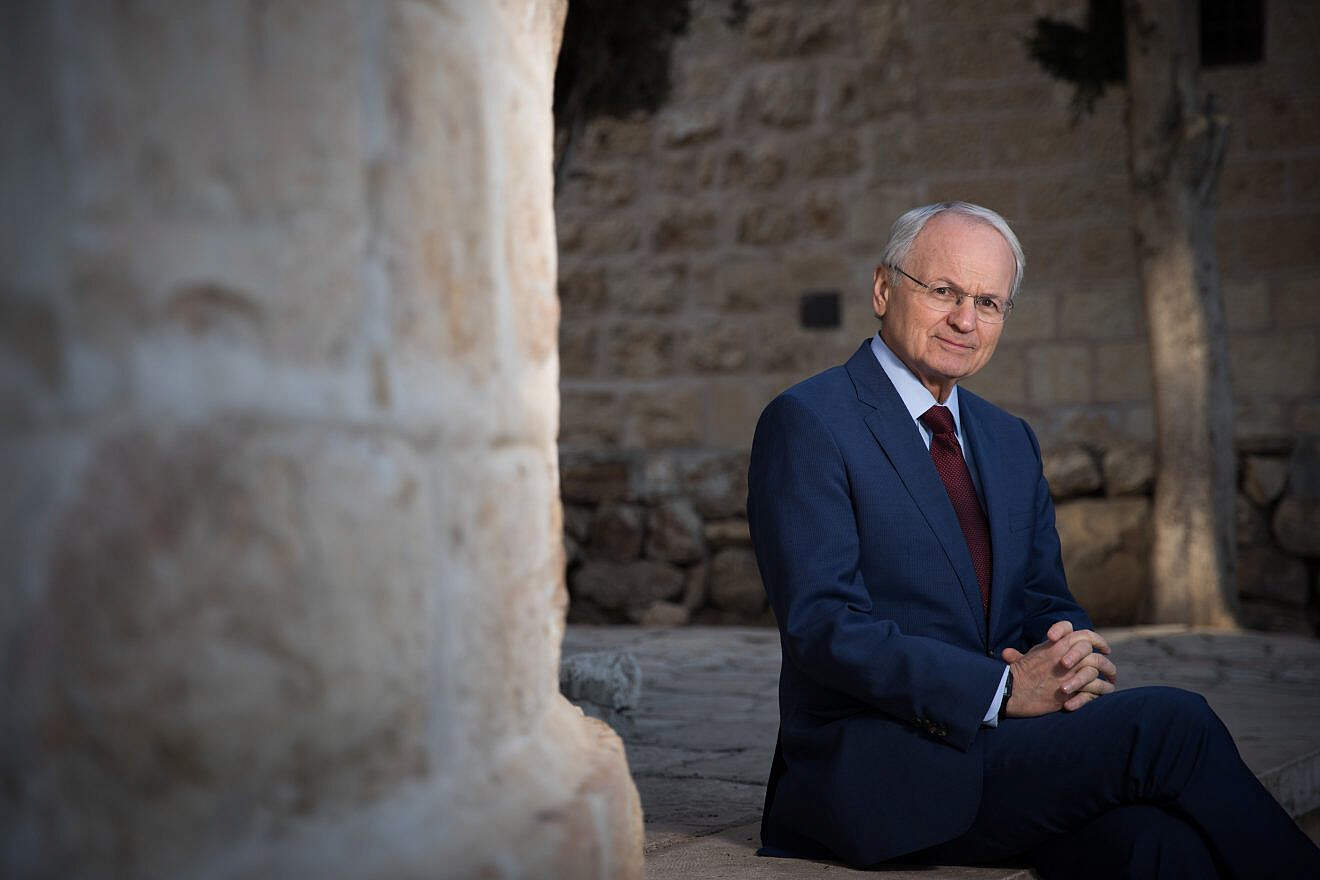
Morton A. Klein is the national president of the Zionist Organization of America.
This op-ed was originally published by USA Today and can be viewed here.