By Morton A. Klein and Elizabeth Berney, Esq.
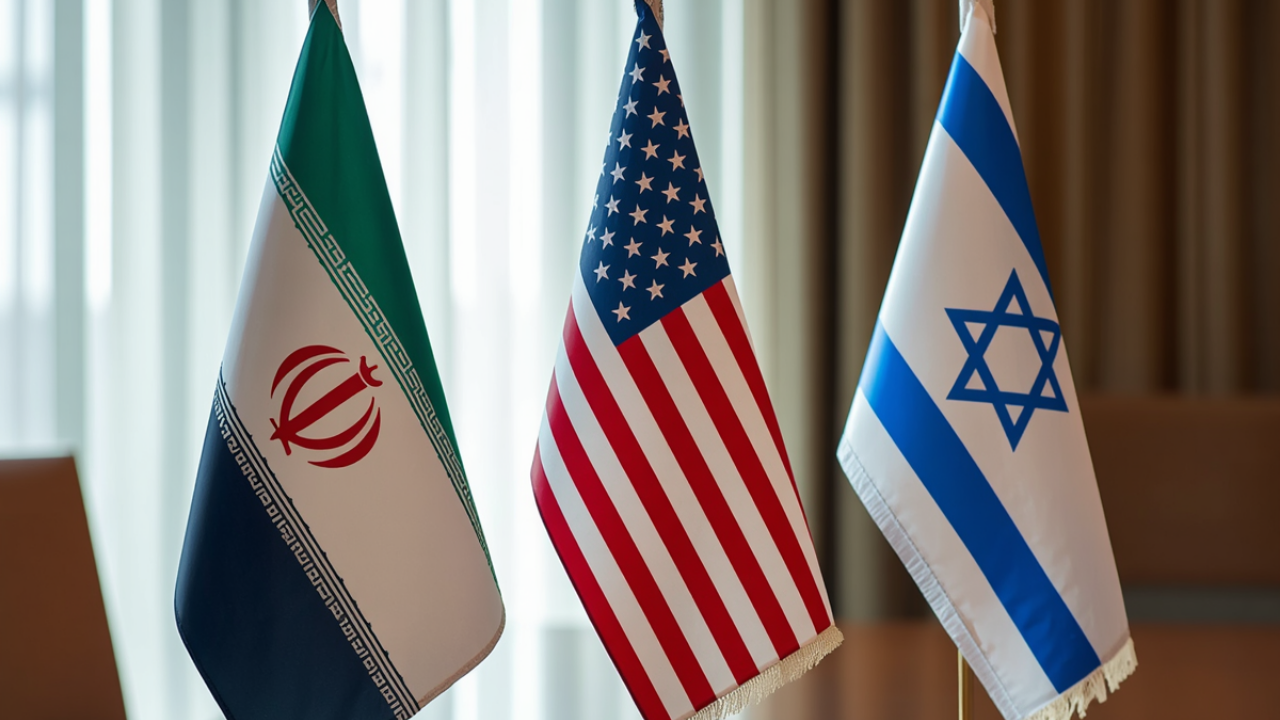
Point One of the U.S.-Iran Memorandum of Understanding (MOU) purports to restrict Israel’s defensive operations and eliminate Israel’s security buffer against the Hezbollah terrorist organization in Lebanon. The MOU’s preamble and Point One state:
“The United States of America and the Islamic Republic of Iran have jointly agreed in good faith on such-and-such a date on the following:
- The United States of America and the Islamic Republic of Iran and their allies in the current war by signing this MOU declare the immediate and permanent termination of military operations on all fronts, including in Lebanon, and undertake from now on not to initiate any war or any military operation against each other, and to refrain from the threat or use of force against each other and ensuring the territorial integrity and sovereignty of Lebanon. The final deal will confirm the permanent termination of the war on all fronts, including in Lebanon, and other provisions of this paragraph.”
MOU Point 13 attempts to enforce Point One by making starting negotiations on issues such as the disposition of enriched uranium subject to both beginning and continuing to implement Point One (and implementing other pro-regime items: removal of the blockade, sanctions waivers and releasing frozen funds). Iran is already using Israel’s response to Hezbollah’s murders of Israeli soldiers to cancel planned negotiations in Switzerland.
If treated as valid and enforced, Point One could severely impair Israel’s ability to defend itself against Hezbollah. For years, Hezbollah’s relentless rocket, missile, drone, and IED attacks have devastated and depopulated northern Israel, forcing the evacuation of entire communities, destroying thousands of homes, and killing and injuring Jewish civilians and soldiers.
Hezbollah’s attacks have continued, in full force, after the MOU was signed. On June 17—two days after President Trump and Vice President Vance signed the MOU—Hezbollah IED attacks killed Israeli reserve officer Alexander Filin and wounded at least seven other Israelis, several seriously. And on June 19, a Hezbollah drone attack killed four more Jewish soldiers.
Israeli Ambassador to the United States Yechiel Leiter listed Hezbollah violations occurring nearly every hour on June 17 and 18, including rocket attacks, missile attacks, explosive drones, IED attacks, and attempted terrorist infiltrations. The sirens are screaming over northern Israel while Hezbollah has continued its attacks virtually uninterrupted.
The MOU’s language appears to be deliberately crafted to create binding legal obligations, despite calling the agreement an MOU. U.S. State Department guidance cautions that merely labeling an agreement a “memorandum of understanding” does not make it non-binding under international law. In order to avoid legal obligations, the State Department advises negotiators not to use terms such as “agree” and “undertake”—but this is precisely the language used throughout the MOU’s preamble and Point One.
Conversely, Point One omits non-binding terms such as “intends to” or “expects to.” The MOU also lacks another safeguard recommended by the State Department: an express disclaimer that the document is not intended to be legally binding under international law.
Assuming the MOU created binding obligations between the U.S. and the Iranian regime, the critical question remains: Can the MOU bind Israel, which is not a party to the MOU?
The answer is clearly no.
Under one of the most fundamental principles of international law, a treaty or international agreement cannot impose obligations on a state that has not consented to be bound.
Georgetown University Law Center’s Guide to the Basics of International Law (2019) succinctly explains that “a treaty cannot bind a non-party or non-participating state,” and treaties are binding only on states that choose to ratify or accept them.
Similarly, the Restatement (Third) of Foreign Relations Law of the United States, § 324, provides that “[a]n international agreement does not create either obligations or rights for a third state without its consent.”
The United States consistently invokes this fundamental principle whenever the U.S. is the non-party. For instance, the U.S. opposes imposing ICC jurisdiction on the U.S. and U.S. service members because the U.S. is not a party to the relevant agreement, the Rome Statute. The principle that obligations cannot be imposed on non-party nations without their consent is rooted in the basic precept of sovereign equality – that all sovereign states are legally equal and retain authority over their own affairs.
The Vienna Convention on the Law of Treaties (1969) (the “VCLT”), which is widely recognized as codifying customary international law, also upholds the same principle.[1]
VCLT Articles 34 and 35 provide that:
“A treaty does not create either obligations or rights for a third State without its consent.”
and
“An obligation arises for a third State from a provision of a treaty if the parties to the treaty intend the provision to be the means of establishing the obligation and the third State expressly accepts that obligation in writing.”
Israel has never accepted any obligations under the MOU, much less accepted them in writing. To the contrary, Israeli officials expressly rejected limiting Israel’s right of self-defense. Israeli Defense Minister Israel Katz stated his and Prime Minister Netanyahu’s “clear policy” that the IDF would remain in southern Lebanon security zones “to protect the border and Israeli communities from there against jihadist elements.” PM Netanyahu made similar statements on June 18.
Israel was not a participant in the MOU negotiations and reportedly was not even given a draft of the MOU before its execution. Under established international law, Israel therefore cannot be bound by the MOU’s provisions.
Breaches by the other side also warrant suspension or termination of an international agreement. (VCLT Article 60.) As Ambassador Leiter documented, Hezbollah has been breaching the MOU virtually every hour since the MOU was signed.
Further, even if the U.S. browbeats, threatens or otherwise coerces Israel into consenting to or complying with the MOU, that consent would be legally invalid.
The VCLT sets forth the basic principle that a state’s consent to be bound by a treaty is invalid and void when such consent is procured through coercion or corruption. (Articles 50 through 52.)
In recent days, Vice President Vance and President Trump have unleashed a barrage of coercive invective and implied threats against Israel.
Vance dismissed Israel’s well-warranted security concerns as “a freakout in Israel” and condemned Israel for daring to defend her people against Hezbollah, saying: “You can’t just kill your way out of solving every single national security problem that you have.”
At the G7 conference, Pres. Trump likewise attacked Israel for defending her citizens from Hezbollah’s attacks, saying “Israel is fighting Hezbollah too long, and too many people are being killed. . . And you don’t have to knock down an apartment house every time you’re looking for somebody. Because there are a lot of people in those apartment houses. And they’re not all Hezbollah, that I can tell you. . . . I’m not happy with the way Israel has handled themselves with Lebanon and with Hezbollah. They should have been able to do the job faster. It just goes on forever.” Trump also demanded: “You don’t have to knock down a building every time someone walks into it.”
Vance also impliedly threatened further loss of U.S. support, saying that “Donald J. Trump is the only head of state in the entire world who is sympathetic to the nation of Israel at this moment in time. . . If I was in the cabinet of the Israeli government, I might not be attacking the only powerful ally that I have anywhere left in the entire world.” Vance also claimed that two-thirds of the defensive weapons that have protected Israel “have been built by American hands and paid for by American tax dollars” – a potential implicit threat to cut off aid and/or weapons sales. Vance also warned “anybody in Israel” who thinks that Trump is a problem “to wake up and smell the reality.”
Axios reported that in early June, Trump told Netanyahu that the Israeli prime minister was “fucking crazy” after Israel struck back at Hezbollah.
And Trump raised alarms in Israel and Lebanon when Trump told NBC’s Meet the Press on June 7, “I’d like to see a more surgical attack on Hezbollah. . . we can recommend Syria [to take on Hezbollah]. . . They [Syria] have a very good leader. ” Trump also absurdly stated during a meeting with Qatar’s Emir on June 16, “If Israel can’t do the job without killing everyone else, Syria should do the job.” And again at the G7 conference in Paris, falsely claimed that too many people were being killed and stated, “I think Syria would do a better job” of taking care of Hezbollah. So Israel should wait for Syria’s jihadis, while Hezbollah is shooting rockets on northern Israeli homes and citizens?
Moreover, Israel’s forces are the surgical forces – not Syria’s. FDD analyst Ahmad Sharawi recounted that Syrian forces are unprofessional and undisciplined, massacred 1,500 Alawite civilians in two days, and massacred 1,700 Druze civilians. Syrian forces would endanger Lebanon’s minorities.
President Trump also repeatedly ordered Israel to stand down, stop military operations and halt airstrikes in Lebanon, including ordering “no more attacks anywhere in Lebanon” on June 14, and demanding that Israel turn back from attacks on Hezbollah in Beirut earlier in June.
It all seems aimed at coercing Israel to comply with an illegal agreement negotiated without Israel’s consent.
Morton Klein is the National President of the Zionist Organization of America. Elizabeth Berney, Esq. is ZOA’s Director of Research and Special Projects.
[1] The VCLT was signed and ratified by 119 countries and signed by another 15 countries without ratification, including Iran and the U.S. The U.S. State Department confirmed that the U.S. nonetheless follows many VCLT rules. VCLT Article 1(a)’s broad definition of “treaty” applies to international agreements regardless of the name given to an agreement.