Zionist Organization of America (ZOA) National President Morton A. Klein released the following statement:
ZOA strongly praises President Donald Trump for announcing on Truth Social that a nuclear deal with Saudi Arabia is contingent on the Saudi kingdom joining the Abraham Accords and normalizing relations with the Jewish State of Israel. This alleviates a significant concern that we raised with the U.S.-Saudi deal yesterday, when it was reported that the deal did not include this important contingency.
We are reprinting the president’s Truth Social post in full here (also reported at Arutz Sheva – Israel National News and Bloomberg):
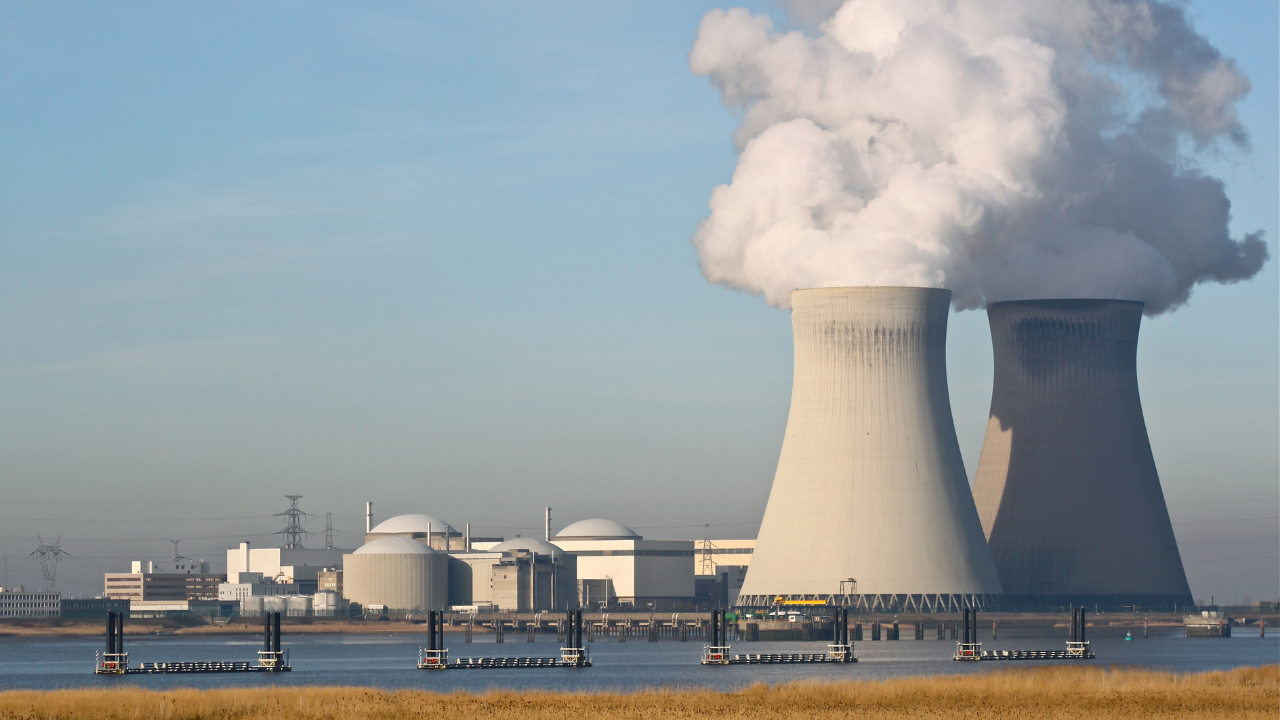
The Civil Nuclear Deal (There will be no enrichment of material!) being made between the United States Department of Energy and Saudi Arabia, which pertains only to non-military use such as the ones that Iran and the UAE (and others) already have, will be approved, but is totally subject to Saudi Arabia joining the very respected and successful Abraham Accords. The United States is not opposed to Civil (Non-Enriched) Nuclear Facilities. Thank you for your attention to this matter! President DONALD J. TRUMP
This Abraham Accords contingency also lessens certain serious concerns and dangers that we raised with the deal yesterday, but other concerns, dangers, and questions with the deal remain
- Reports yesterday showed that this deal breaks from the “Gold Standard” of non-proliferation, which would prohibit domestic uranium enrichment and plutonium reprocessing—instead, the deal can lead to Saudi nuclear enrichment after a two-year joint U.S.-Saudi study. Has nuclear enrichment and reprocessing been foreclosed now? If not, this is extremely dangerous. Saudi enrichment is likely to lead to nuclear weapons proliferation (including by Turkey’s genocidal regime, who repeatedly calls for Israel’s destruction, and Egypt, which is massing troops and weapons in Sinai), rendering Israel’s QME (qualitative military edge) close to useless. As the Wall Street Journal pointed out, Saudi Arabia doesn’t need to enrich uranium “unless it would like to establish the rudiments of a nuclear weapons program.”
- Further, Saudi Arabia’s rejection of the “Additional Protocol” for rigorous International Atomic Energy Agency inspections and monitoring means that inspections and monitoring will be inadequate. The UAE signed the protocol.
- Saudi Arabia has a history of breaks with the Iranian terror regime followed by rapprochements with that regime. As a result of the most recent Saudi-Iranian rapprochement in 2023, facilitated by China, Saudi Arabia refused to allow the U.S. to use bases in the Kingdom for Operation Midnight Hammer in 2025, officially condemned the U.S. for that operation, and refrained from enforcing the UN Security Council’s snapback sanctions against Iran. That rapprochement only collapsed when Iran attacked Saudi Arabia in 2026. Saudi Arabia’s entry into the Abraham Accords may lessen – but does not eliminate – the possibility that Saudi Arabia will in the future again ally with the Iranian terror regime if the regime is left standing.
- Saudi Arabia has a strategic partnership, including joint naval drills, with China.
- The Middle East is an unstable arena. Saudi Arabia’s relatively friendly relations with the U.S. can change in an instant. And remember that 15 of the 19 9/11 Arab terrorists were from Saudi Arabia. And a significant number of Saudis immediately left the country after 9/11. Another case in point is that Iran’s nuclear program began with the U.S. “Atoms for Peace” program in 1957 – when Iran was friendly to the U.S. and Israel. When Khomeini transformed Iran into a genocidal regime bent on fulfilling its calls for death to America and America’s allies, Iran’s nuclear program turned into a nightmare for the U.S. and the region. A Saudi-U.S.-Israeli Abraham Accord could help solidify friendly relations but does not eliminate the possibility of Saudi Arabia turning into another extremely dangerous Iran-like nuclear regime that jettisons the Accord.
It is also important to note that when I personally visited and met with top Saudi officials, they strongly warned me not to wear anything outside that would make it clear that I’m Jewish, meaning, no yarmulkes or Jewish stars. In addition, I complained to top officials that on every Saudi map, in their textbooks, and on their walls, there was no Israel listed on their maps of the Middle East; only Palestine. They assured me they would change this problematic omission and would soon add Israel to their maps. But in fact, to this day, they never fulfilled that pledge.
- We’re also concerned about reports that there are two secret side sections to the agreement. Congress needs to know what is in those secret sections.